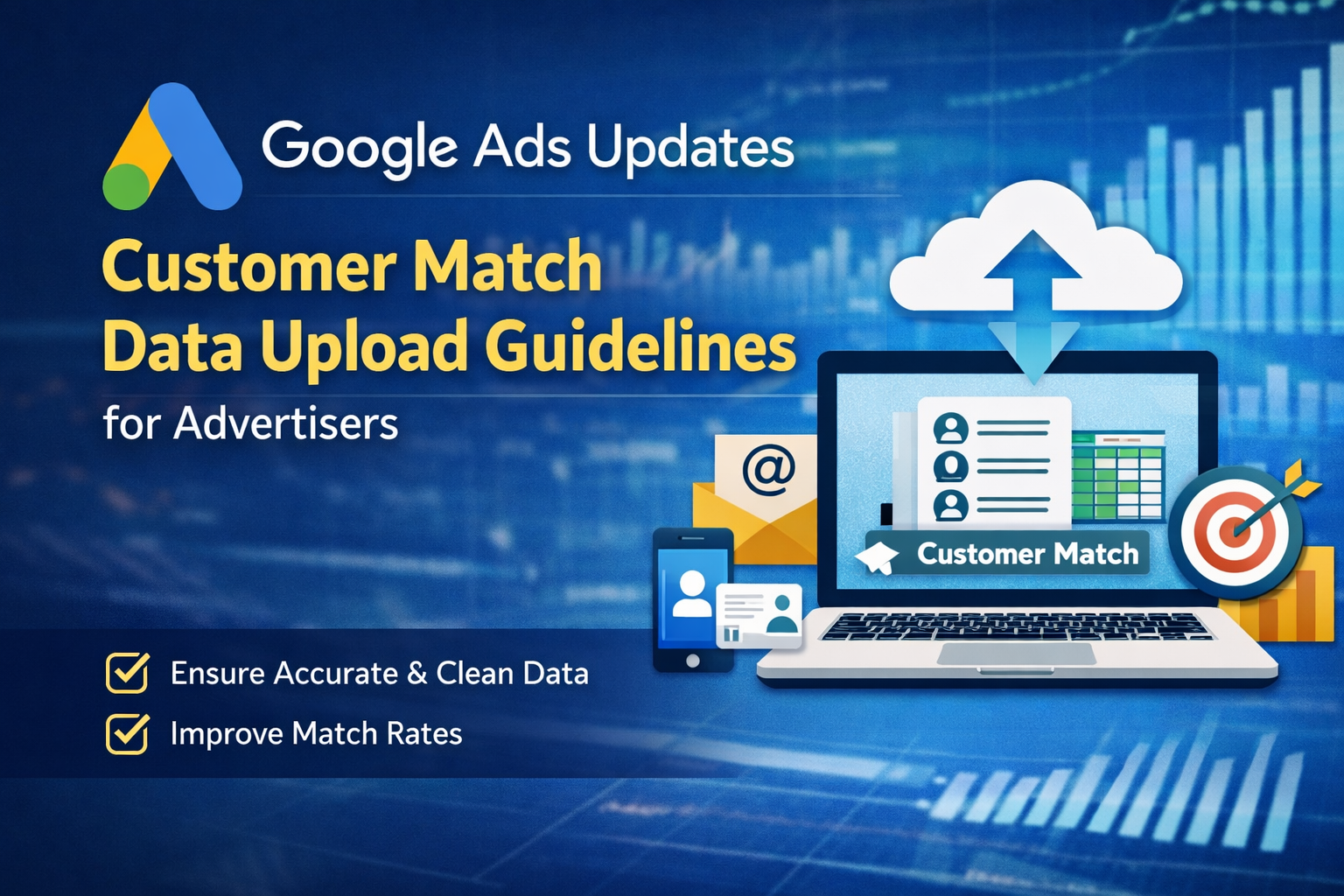
Google Ads Updates Customer Match Data Upload Guidelines for Advertisers
Google recently updated its documentation related to Customer Match data uploads in Google Ads. The update focuses on how advertisers should prepare and upload their first-party customer data to improve matching and campaign performance.
Customer Match allows businesses to upload their own customer information such as email addresses, phone numbers, and mailing details. Google then attempts to match this data with signed-in users across its platforms, including Google Search, YouTube, Gmail, and the Display Network.
Focus on Clean and Properly Formatted Data
The updated documentation highlights the importance of uploading well-structured and properly formatted customer data. When information is inconsistent or incorrectly formatted, Google may not be able to match those records effectively with user accounts.
For example, email addresses should follow standard formats such as customer@example.com. Phone numbers should include the correct country code, especially for U.S. audiences. Names and addresses should also follow consistent formatting to improve data accuracy.
Why This Matters for Advertisers
Higher quality customer data typically leads to better match rates. When more users are successfully matched, advertisers can reach a larger portion of their existing audience across Google properties.
This is particularly important as digital advertising continues to shift toward first-party data strategies. Platforms like Google are encouraging advertisers to rely more on customer relationships and verified data instead of third-party tracking methods.
Example Use Cases
A U.S. e-commerce brand selling fitness equipment might upload a list of past customers who previously purchased home gym products. Using Customer Match, they could promote new workout gear or seasonal discounts directly to those existing customers through YouTube or Google Search ads.
Similarly, a local home services company could upload customer email lists to promote maintenance packages or seasonal service offers. Because these users already have a relationship with the business, targeted ads often perform better.
Key Takeaway
The update does not introduce a new feature, but it reinforces a growing trend in digital advertising: clean, reliable first-party data is essential. Advertisers should regularly review their customer databases, ensure proper formatting, and follow Google’s upload guidelines to maximize campaign reach and performance.